
 Business License
Universal Joint Coupling: A Practical Guide for Angled Shaft Drives
A mining truck operator noticed a steady vibration in the driveshaft every time the vehicle climbed a steep haul road. The maintenance team inspected the universal joint coupling and found that one bearing cap had lost its grease seal. Dirt had entered the needle bearings, and the joint was wearing unevenly. The failure was not sudden; it was the result of a small maintenance gap that grew into a costly replacement.
This guide explains how a universal joint coupling transmits torque between shafts that are not perfectly aligned. You will learn how single and double joints handle different angles, when a cardan shaft is the right choice, and how to select, install, and maintain these couplings for long service life. Whether you are specifying a driveshaft for mobile equipment or replacing a worn joint in industrial machinery, this article will help you make a reliable choice.
At Hebei Suju, we manufacture universal joint couplings and cardan shafts for mining trucks, industrial drives, and power transmission systems. Our team can also produce custom cardan shafts from your drawing or sample.
What Is a Universal Joint Coupling?
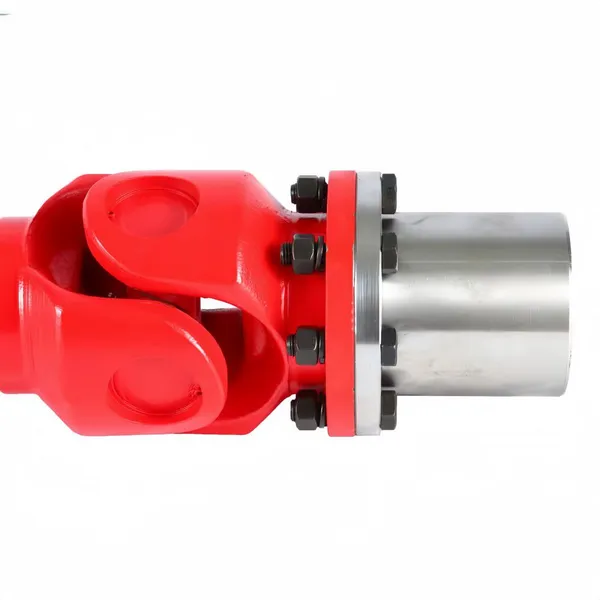
A universal joint coupling, also called a U-joint or Hooke's joint, is a mechanical connection that transmits torque between two shafts that meet at an angle. It consists of a cross-shaped journal with four bearing cups mounted at the ends, connected to two yokes on the driving and driven shafts. As the input shaft rotates, the cross transmits motion to the output shaft while allowing angular movement between them.
In other words, a universal joint coupling lets one rotating shaft drive another even when their centerlines are not in a straight line. This simple but effective design is the basis for the modern universal joint shaft and the extended cardan shafts used in heavy industry.
Universal joint couplings are common in vehicles, mobile equipment, and industrial drives where shafts cannot be kept in perfect alignment. They tolerate large angular misalignment, making them ideal for applications with moving frames, suspension travel, or long shaft spans. Unlike flexible couplings that rely on elastomer elements, U-joints use hardened steel crosses and needle bearings to handle high torque.
The universal joint coupling is a key component in cardan shafts, which extend the useful range of the design by combining two universal joints with a sliding spline or tube section between them.
How Universal Joint Couplings Work
Torque enters the driving yoke and rotates the cross. The cross transfers the rotation to the driven yoke through its four bearing cups. Because the cross can pivot in both yokes, the coupling accommodates the angle between the shafts.
A single universal joint coupling has an important characteristic: the output shaft does not rotate at exactly the same speed as the input shaft when the joint operates at an angle. This speed variation, called fluctuation, increases with the operating angle. For many drives this is acceptable, but for precision or high-speed applications it can cause vibration and noise.
A double universal joint coupling solves this problem. By using two joints connected in phase and set at equal angles, the speed fluctuations cancel out. The output shaft then rotates at a constant average speed that matches the input shaft.
This is why most industrial cardan shafts use a double joint arrangement. The same principle applies whether the device is called a Hooke's joint, a universal joint coupling, or a driveshaft coupling.
Pro Tip: When installing a double universal joint coupling, make sure both yokes on the intermediate shaft are aligned in the same plane. Incorrect phasing doubles the speed fluctuation instead of canceling it.
Universal Joint Coupling Types
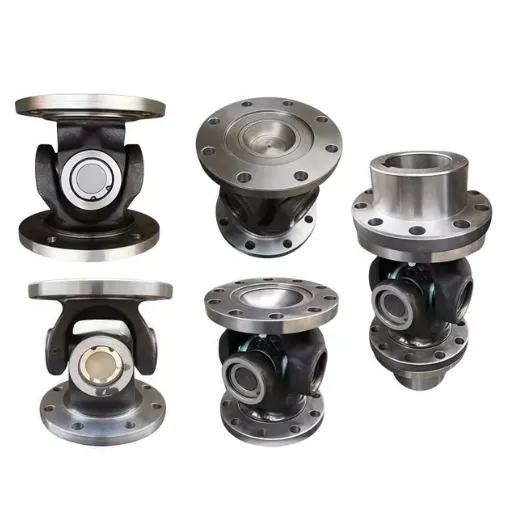
Universal joint couplings come in several designs, each suited to different loads, angles, and duty cycles.
Single Universal Joint
A single joint uses one cross and two yokes. It is simple, compact, and economical. Single joints are used when the operating angle is small and some speed variation is acceptable. Common examples include steering shafts, light driveshafts, and auxiliary equipment.
Double Universal Joint
A double joint uses two crosses and an intermediate shaft to cancel speed fluctuation. It is the standard choice for most industrial driveshafts and cardan shafts. Double joints are used when the input and output shafts must operate at the same average speed.
Cardan Shaft
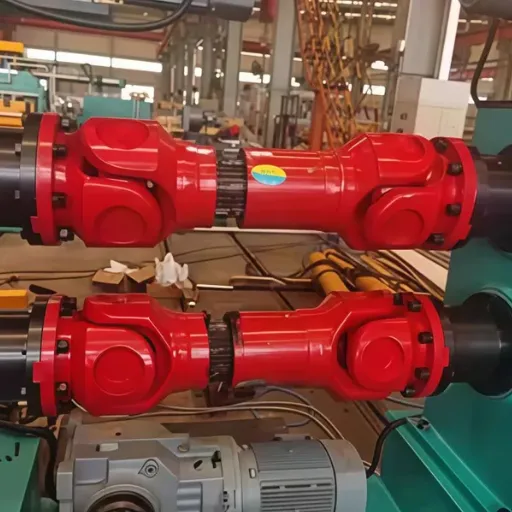
A cardan shaft is an extended driveshaft assembly that combines two universal joints with a sliding spline or telescoping tube. It transmits torque across long distances and large angles while allowing axial movement. Cardan shafts are common in rolling mills, mining trucks, pumps, and test stands.
Constant Velocity Joint
A constant velocity (CV) joint is a specialized universal joint coupling that eliminates speed fluctuation without needing a double joint. CV joints use ball grooves and cage mechanisms to keep the input and output shafts rotating at exactly the same speed. They are widely used in front-wheel-drive vehicles and precision machinery.
In summary, the main universal joint coupling types are:
Single joint: Best for small angles and simple drives.
Double joint: Cancels speed fluctuation for smooth output.
Cardan shaft: Spans long distances and allows axial movement.
CV joint: Maintains constant velocity for precision applications.
Key Selection Criteria for Universal Joint Couplings
Selecting the right universal joint coupling requires attention to torque, angle, speed, environment, and duty cycle. Underestimating any of these factors can lead to early wear or failure. A structured universal joint coupling selection process helps you match the coupling to the real demands of the drive.
For a broader view of matching couplings to applications, see our coupling selection guide.
1. Torque and Load Requirements
The joint must handle the maximum continuous torque of the drive plus any shock or peak loads. Industrial applications such as crushers, mills, and haul trucks often produce torque spikes during startup or load changes. Apply a service factor based on the application severity when selecting the joint size.
For example, a drive system with 2,000 N·m of nominal torque and a service factor of 2.0 requires a universal joint coupling rated for at least 4,000 N·m. Heavier shock loads may require a higher service factor or a larger joint. Service factor guidance is published by organizations such as the American Gear Manufacturers Association.
2. Operating Angle
Universal joint couplings are rated for maximum operating angles. A single joint may handle angles up to 25° to 45° depending on size and design. Double joints and cardan shafts can accommodate larger effective angles because each individual joint operates at a smaller angle. Operating near the maximum angle increases wear, vibration, and speed fluctuation.
3. Rotational Speed
Higher speeds increase centrifugal forces and reduce the allowable operating angle. At high RPM, even small imbalances cause vibration and bearing wear. For high-speed cardan shafts, specify dynamic balancing to the required ISO grade. At Hebei Suju, balancing and inspection are part of our quality control process.
4. Shaft Distance and Axial Movement
If the driving and driven shafts are far apart, a cardan shaft with a telescoping spline is usually needed. The spline allows the shaft length to change as the machinery moves or thermal expansion occurs. Measure the minimum and maximum required length before ordering.
5. Operating Environment
Dust, moisture, chemicals, and temperature extremes affect seal performance and lubricant life. In harsh environments, specify sealed bearing caps and high-quality grease. For marine or washdown applications, corrosion-resistant materials and protective coatings may be required.
Common Universal Joint Coupling Applications
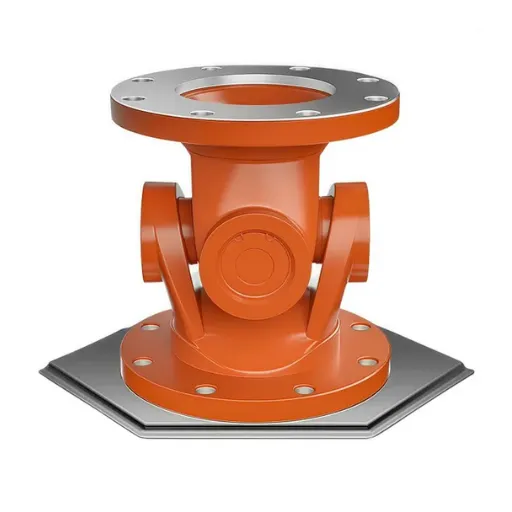
Universal joint couplings are used wherever torque must be transmitted across an angle or where shafts move relative to one another. This section covers the most common universal coupling applications Hebei Suju supplies, from mobile equipment to stationary industrial drives.
Mining and Construction Vehicles
Haul trucks, wheel loaders, and excavators use cardan shafts with universal joint couplings to transfer power from the engine and transmission to the axles. The suspension travel and frame flexing create large angles that only U-joints or CV joints can accommodate. For more on heavy-duty options, see our couplings for mining applications.
Rolling Mills and Steel Plants
Rolling mills use long cardan shafts to connect motors and gearboxes to work rolls. The shafts must handle high torque, large angles, and axial movement during roll changes. Properly maintained cardan shafts can last for years in these demanding conditions. Hebei Suju supplies steel mill couplings and cardan shafts for these environments.
Pumps and Compressors
Some pump and compressor drives use cardan shafts when the motor and driven machine are separated by a long distance or mounted on different foundations. The universal joint coupling compensates for installation misalignment and thermal movement.
Agricultural and Forestry Equipment
Tractors, harvesters, and forestry machines use universal joint couplings in power take-off (PTO) drives and implement shafts. These applications often involve variable angles and intermittent shock loads.
Industrial Test Stands
Test stands use precision cardan shafts to connect motors or dynamometers to test pieces. These shafts often require dynamic balancing and accurate alignment to avoid measurement errors.
Universal Joint Coupling Installation Best Practices
Proper installation prevents vibration, premature wear, and failure. Follow these steps.
Align the Shafts
Check the angular and parallel alignment between the driving and driven shafts. For a double universal joint coupling, both joints should operate at equal angles and be phased correctly. Use alignment tools or gauges to verify. For detailed procedures, see our guide to measuring shaft misalignment.
Install the Yokes
Mount the yokes on the shafts and tighten the fasteners to the manufacturer's torque specification. Do not over-tighten, as this can distort the yoke or damage the shaft.
Lubricate Before Assembly
Apply the recommended grease to the bearing cups and seals before installation. Some joints come pre-greased, but verifying lubrication is always good practice. Use the grease type specified for the operating temperature and load.
Check Phasing on Double Joints
Make sure the yokes on the intermediate shaft are in the same plane. Incorrect phasing causes speed fluctuation, vibration, and accelerated wear. Mark the components during assembly to maintain correct orientation.
Verify Clearance and Movement
Rotate the shaft by hand and check for binding or rough spots. Confirm that the telescoping spline or sliding tube moves freely through its full travel range.
Maintenance and Troubleshooting
Universal joint couplings are durable, but they still need regular inspection and lubrication.
Inspect Regularly
Check the joints for signs of wear during scheduled maintenance. Look for:
Loose or damaged bearing caps: Can cause vibration and joint failure.
Leaking grease seals: Allow contamination to enter the bearings.
Rust or corrosion: Indicates moisture ingress or inadequate protection.
Play in the joint: Excessive movement means the bearings or cross are worn.
Noise: Clicking, clunking, or squeaking often signals a worn joint.
Lubricate on Schedule
Most universal joint coupling failures start with lubrication breakdown. Follow the manufacturer's recommended grease interval, and use the correct grease for the application. In dirty environments, more frequent lubrication may be needed.
Replace Worn Components
When a cross or bearing cup shows wear, replace the entire joint as a matched set. Mixing old and new components can lead to uneven loading and shorter life.
Universal Joint Coupling vs Flexible Coupling
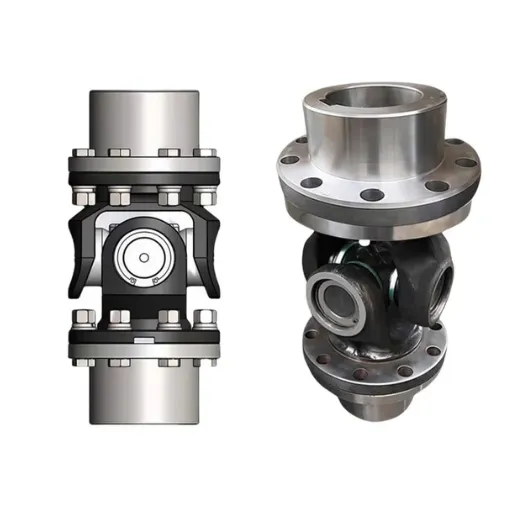
Engineers sometimes compare universal joint couplings with flexible couplings because both connect rotating shafts. The right choice depends on torque, misalignment type, and speed requirements.
| Factor | Universal Joint Coupling | Flexible Coupling |
|---|---|---|
| Angular misalignment | Large angles possible | Small angles only |
| Parallel misalignment | Limited without double joint | Some types accommodate |
| Axial movement | Yes, with spline or telescoping shaft | Limited |
| Torque capacity | High | Low to medium |
| Speed fluctuation | Present in single joint | Minimal |
| Lubrication | Required | Usually not needed |
| Best for | Vehicles, driveshafts, long spans | Pumps, motors, compressors |
If your application involves large angles, long shaft spans, or moving machinery, a cardan shaft with universal joint couplings is usually the better choice. If the shafts are closely aligned and you need vibration damping, a flexible coupling may be more appropriate. For very high torque and severe misalignment, a drum gear coupling may be worth considering.
When to Consider a Custom Cardan Shaft
Catalog cardan shafts fit many applications, but custom designs are often needed for heavy industry and special machinery. Consider a custom cardan shaft when:
The shaft length or spline travel is non-standard.
The torque or speed exceeds standard catalog ratings.
The operating angles are unusually large.
The environment requires special seals, coatings, or materials.
You need to match a legacy driveshaft that is no longer available.
At Hebei Suju, we produce custom cardan shafts and universal joint couplings from customer drawings or samples through our custom coupling manufacturing service. Send us your drawing or sample, and our engineers will review manufacturability and recommend materials.
Mini-Story: A steel plant maintenance manager named Li needed to replace a cardan shaft on a roughing mill during a planned shutdown. The original manufacturer no longer supplied the exact length and flange pattern. Hebei Suju reverse-engineered the worn shaft, confirmed the torque rating, and produced a replacement that fit the existing bolt circle and spline. The mill restarted on schedule, and the new shaft matched the original performance.
Universal Joint Coupling Selection: Key Takeaways
A universal joint coupling is a reliable way to transmit torque across angles and moving shaft positions. Single joints are simple and compact, while double joints and cardan shafts cancel speed fluctuation and span long distances. Selecting the right universal joint coupling size, angle, and lubrication schedule is the key to long service life.
Key takeaways:
Universal joint couplings transmit torque between shafts that meet at an angle.
Single joints create speed fluctuation; double joints cancel it when phased correctly.
Cardan shafts add length and axial movement for industrial and mobile drives.
Torque, angle, speed, environment, and duty cycle all affect selection.
Regular lubrication and inspection prevent most premature failures.
Custom cardan shafts solve non-standard length, torque, and mounting requirements.
At Hebei Suju, we help engineers select and manufacture universal joint couplings and cardan shafts for mining trucks, rolling mills, pumps, and industrial drives. Explore our cardan shaft range or request a quotation for your next universal joint coupling project.
Recently Posted
-
Jaw Coupling Spider Replacement: A Step-by-Step Maintenance Guide
July 28, 2026A maintenance technician at a packaging plant in Brazil noticed vibration on a motor-pump set during his morning rounds. The motor Read More
 -
Flexible Coupling for Motor Pump Sets: A Selection Guide
July 28, 2026A maintenance manager at a water treatment plant in Southeast Asia called us after replacing motor pump couplings three times in 1 Read More
 -
Flexible Shaft Coupling: Selection Guide for Industrial Drives
July 28, 2026When two rotating shafts are connected directly, even a small amount of misalignment can generate vibration, bearing load, and pre Read More
 -
Elastic Coupling: Vibration Control for Industrial Drives
July 28, 2026When a motor-pump set starts vibrating above acceptable limits, the first checks usually fall on bearing wear, impeller balance, o Read More

Contact Us

Recommended Products
-
 OEM Customizable Cardan Shaft Coupling Flexible Rigid Steel for Air Compressor Propeller Universal Construction Printing ShopsNegotiableMOQ: 2 Pieces
 -
Kc Coulpling Roller Chain Coupling Set With Chain and Sprocket for General MachineryNegotiableMOQ: 1 Piece
-
High Transmission Efficiency Drum Gear Coupling Easy Installation Gear Coupler For Heavy MachineryNegotiableMOQ: 10 Pieces
-
High-Torque Roller Chain Coupling Durable Steel Aluminium Construction Customizable Precision Engineering OEM Shaft CouplingsNegotiableMOQ: 2 Pieces
-
Customizable Rigid Iron Steel Aluminium Rubber Tyre Coupling OEM Support for Pumps Industrial Equipment Construction IndustriesNegotiableMOQ: 10 Pieces
-
Jsb Flexible Grid Coupling With Metallic Elastic Element Factory Direct Spider Snake Spring CouplingNegotiableMOQ: 10 Pieces
-
High Torque JQ/JQW Type Clamp Coupling for Motor & Gearbox 45 Steel Jacketed Iron Disc Structure Flexible Rigid OEM SupportedNegotiableMOQ: 2 Pieces
-
SWC Series Flange Universal Joint Coupling Hardened Cross Shaft Heavy Duty TransmissionNegotiableMOQ: 1 Piece
-
Heavy Duty Universal Coupling High Quality Universal Shaft for Machinery and EquipmentNegotiableMOQ: 1 Piece
-
OEM Customized Precision Cast Iron Zinc Aluminum Die Castings New Hydraulic Parts Fittings 1 Year WarrantyNegotiableMOQ: 100 Pieces
-
Yl Series Rigid Flange Coupling Power Transmission PartsNegotiableMOQ: 2 Pieces
-
Flange Coupling for Water Pump and Compressor Applications With Rubber Gasket SealNegotiableMOQ: 2 Pieces
-
Heavy-Duty Telescopic Welding Cardan Shaft for Universal UseNegotiableMOQ: 1 Piece
-
Flexible Universal Shaft Flange Coupling for Marine and Industrial Drive SystemsNegotiableMOQ: 10 Pieces
-
Durable Expansion Sleeve, Locking Assembly & Taper Lock Bushing for Robotic Arm JointsNegotiableMOQ: 1 Piece
-
High Quality Yl Type Rigid Flange Coupling Mechanical Transmission CouplingNegotiableMOQ: 2 Pieces
-
Stainless Steel Flexible Universal Joint Coupling for Motor Flange Gear Pump and Spline ShaftNegotiableMOQ: 1 Piece
-
Compact Drum Gear Coupling for Heavy Industrial Transmission High Torque CapacityNegotiableMOQ: 10 Pieces
-
TL Series Elastic Pin Coupling Easy Replace Rubber Bush Coupling With Shaft Misalignment CompensationNegotiableMOQ: 10 Pieces
-
Professional Manufacture SWC-Wf Cardan Shaft Universal Joint CouplingNegotiableMOQ: 1 Piece