
 Business License
How to Select an Industrial Coupling: A Complete Buyer's Guide
An engineer at a pump station in the Middle East specified a flexible coupling based only on shaft diameter. The fit was correct, but the coupling failed within eight months. The cause was not the bore size. It was torque overload combined with angular misalignment that the selected coupling could not absorb.
That failure cost the plant three days of lost production. It also taught the maintenance team that knowing how to select an industrial coupling means more than matching dimensions. You'll need to evaluate torque, speed, misalignment, environment, and service factor together.
This guide explains how to select an industrial coupling for buyers, engineers, and maintenance managers. You'll learn which coupling selection criteria matter most, how different industrial couplings compare, and how to avoid the mistakes that lead to premature failure. Whether you're sizing a new drive or replacing a worn component, this article can help you make a reliable choice.
At Hebei Suju, we manufacture industrial couplings for steel mills, mining equipment, cement plants, pumps, compressors, and automation machinery. Our engineers review application data before recommending a coupling type and size. If you already have a drawing or sample, send it to us for a free engineering review.
What Is an Industrial Coupling?
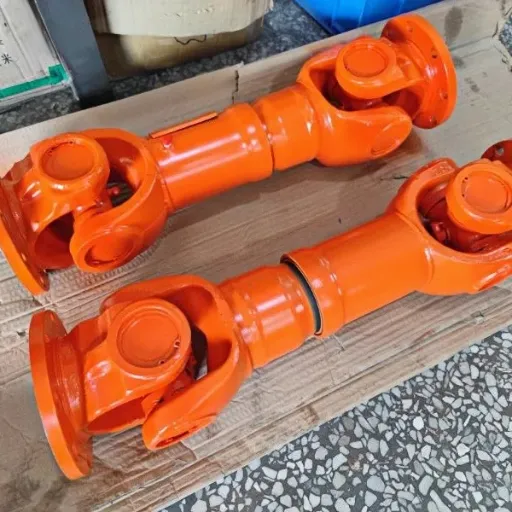
An industrial coupling is a mechanical device that connects two rotating shafts to transmit torque while accommodating some degree of misalignment, vibration, or axial movement. Couplings appear in almost every industrial power transmission system, from small motor-pump sets to large rolling mill drives.
Industrial couplings fall into two broad categories. Rigid couplings connect shafts with no allowance for misalignment. Flexible couplings allow for angular, radial, or axial displacement between shafts. The right choice depends on the application requirements.
Understanding how to select an industrial coupling starts with collecting accurate application data. Without torque, speed, misalignment, and environmental information, even an experienced supplier can only guess at the right product.
Key Coupling Selection Criteria
Every coupling application can be broken down into five core criteria. If you underestimate any one of them, the coupling may wear prematurely, overheat, or fail.
1. Torque and Service Factor
The coupling must handle the maximum continuous torque of the drive. You can estimate nominal torque from motor power and speed. However, industrial drives also produce peak torque from startup, braking, shock loads, and reversing duty.
The service factor adjusts the nominal torque to account for these conditions. For example, a conveyor drive might use a service factor of 1.5, while a steel rolling mill or crusher might need 2.0 to 3.0. Always select a torque rating coupling whose rated torque exceeds the nominal torque multiplied by the service factor.
A simple formula to remember is:
Adjusted torque = Nominal torque × Service factor
For example, a 250 kW motor running at 1,000 RPM produces approximately 2,388 N·m of nominal torque. With a service factor of 2.0, the coupling should be rated for at least 4,776 N·m. Selecting a coupling below this value increases the risk of fatigue and early failure.
For gear coupling selection, torque capacity is usually the dominant factor. For flexible coupling selection, torque capacity and shock absorption must be balanced.
2. Operating Speed
Speed affects coupling balance, centrifugal force, and lubrication requirements. At low speeds, almost any coupling type can work. At high speeds, imbalance causes vibration, bearing load, and noise.
For speeds above 3,000 RPM, specify dynamic balancing to the appropriate ISO grade. Gear couplings, diaphragm couplings, and precision flexible couplings are common in high-speed applications. Universal joint couplings can create speed fluctuation at large operating angles.
Mini-Story: A maintenance supervisor named David replaced a coupling on a high-speed compressor drive. He chose the same model number as the original without checking the operating speed. The new coupling was not balanced to the required grade. Within weeks, vibration alarms increased and bearing temperature rose. After switching to a dynamically balanced coupling, vibration dropped and the compressor returned to normal operation.
3. Shaft Misalignment
Shaft misalignment is one of the most common reasons couplings fail. Even carefully aligned machines can move due to thermal expansion, foundation settlement, bearing wear, and assembly tolerances. Choosing the right shaft misalignment coupling starts with measuring or estimating three types of misalignment:
Angular misalignment: The angle between the centerlines of the two shafts.
Radial misalignment: The parallel offset between shaft centerlines.
Axial movement: The expected end float of the connected shafts.
Different coupling types tolerate different levels of misalignment. Gear couplings handle moderate misalignment and high torque. Flexible couplings absorb small misalignment and vibration. Cardan shafts tolerate large angular misalignment. Rigid couplings require near-perfect alignment.
4. Operating Environment
The environment affects material selection, sealing, and maintenance intervals. Consider these factors:
Temperature: High heat reduces elastomer life and changes lubricant viscosity.
Dust and moisture: Contamination accelerates wear in open gear couplings.
Chemical exposure: Corrosive atmospheres require protective coatings or special materials.
Outdoor installation: UV exposure, rain, and temperature cycling affect elastomer elements.
Safety requirements: Some applications need guards, anti-spark designs, or limited end float.
For harsh environments such as steel mills or mining and cement plants, sealed and lubricated couplings are often the better choice. Gear couplings for these applications typically use alloy steel hubs and sleeves with nitrile or Viton seals. In corrosive settings, stainless steel or protective coatings may be necessary. Always share environmental details with your supplier so they can recommend the right material and seal combination.
5. Space and Installation Constraints
The available space between shafts, the need for maintenance access, and the ease of replacement all influence coupling selection. A spacer coupling allows axial disassembly without moving the connected machines. A split hub design can simplify installation on shafts that can't be moved.
If the original equipment has tight envelope limits, a custom coupling may be the only option. Hebei Suju produces custom couplings from customer drawings or worn samples to fit restricted spaces.
Common Types of Industrial Couplings
Choosing the right coupling type is easier when you understand the strengths and limitations of each design.
Gear Couplings
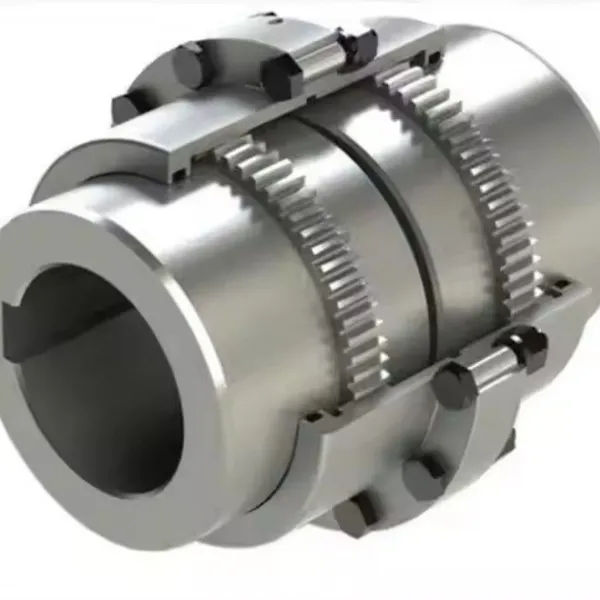
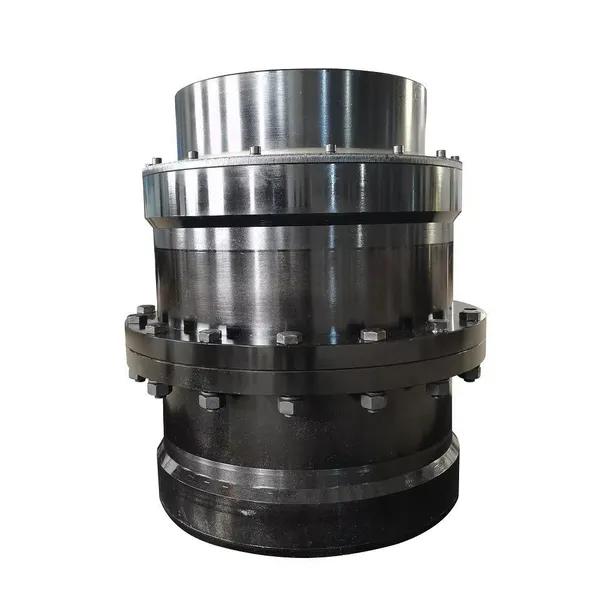
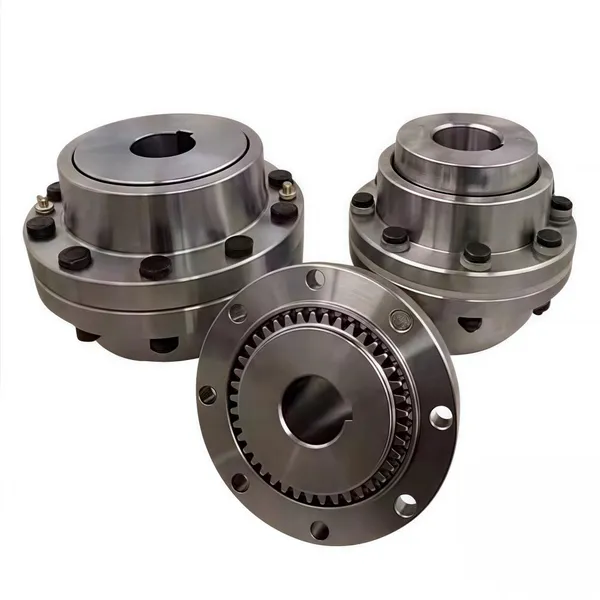
Gear couplings transmit torque through meshing external and internal gear teeth. The teeth are usually crowned to allow angular, radial, and axial misalignment. Gear couplings are used when torque is high and some misalignment is expected.
Common applications include steel rolling mills, mining hoists, cement kilns, cranes, and large pumps. They require lubrication and periodic inspection, but a well-specified gear coupling can deliver long service life in severe conditions.
At Hebei Suju, our GIICL drum gear couplings are machined from forged alloy steel and heat-treated for hardness. We supply them for heavy machinery worldwide.
Flexible Couplings
Flexible couplings contain an elastic or movable element that absorbs vibration, shock, and small misalignment. They protect motors, gearboxes, and driven equipment by reducing transmitted vibration.
Common flexible coupling types include:
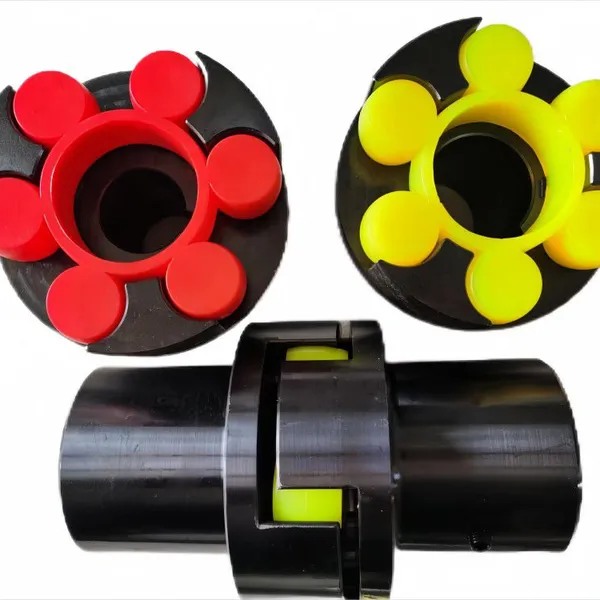
Jaw couplings: Use an elastomer spider between two hubs. Simple and low cost. See our jaw coupling guide.
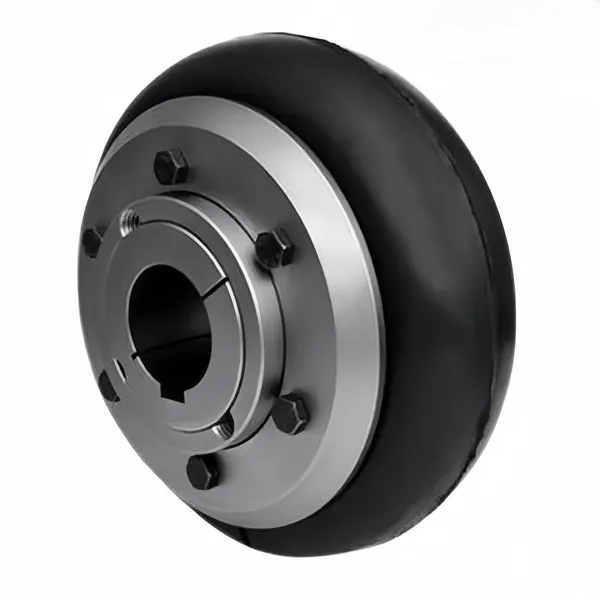
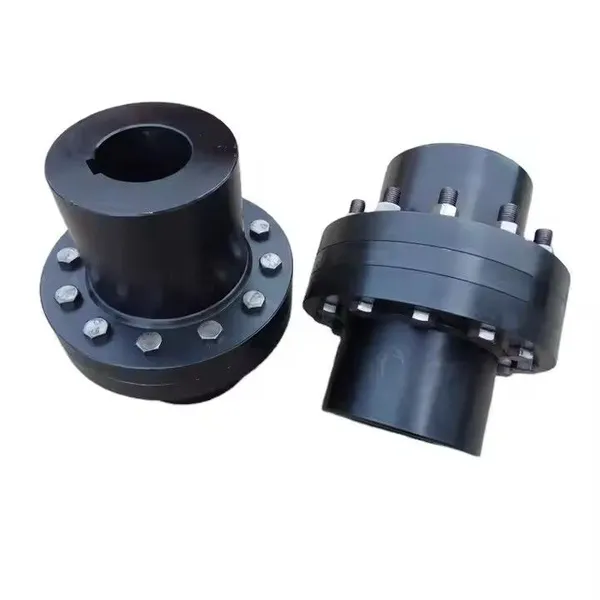
Tyre couplings: Use a rubber tyre element for high shock absorption.
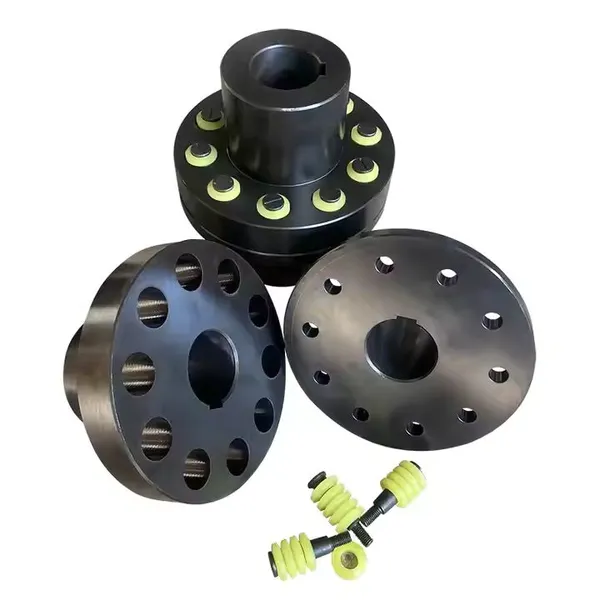
Pin and bush couplings: Use rubber bushes on pins for medium-duty drives.
Diaphragm couplings: Use thin metal discs for high-speed, precision applications.
Flexible couplings are widely used in pumps, fans, compressors, conveyors, and automation equipment. They're a good fit when vibration damping and misalignment tolerance matter more than maximum torque capacity.
Cardan Shafts and Universal Joint Couplings
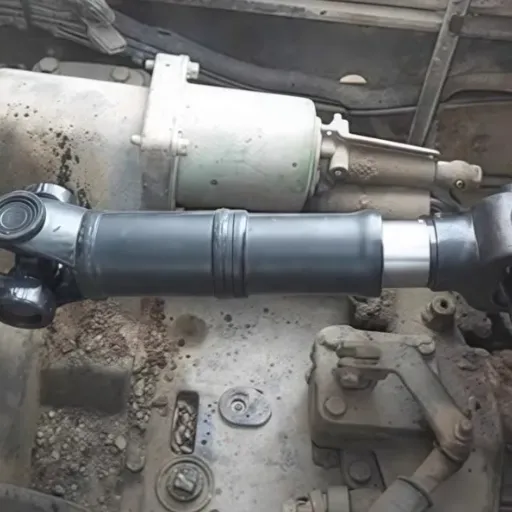
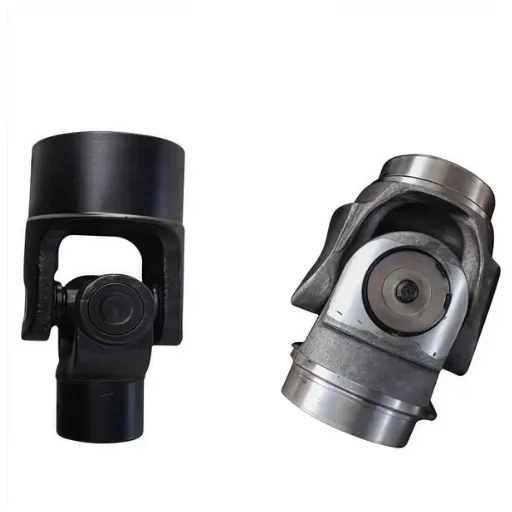
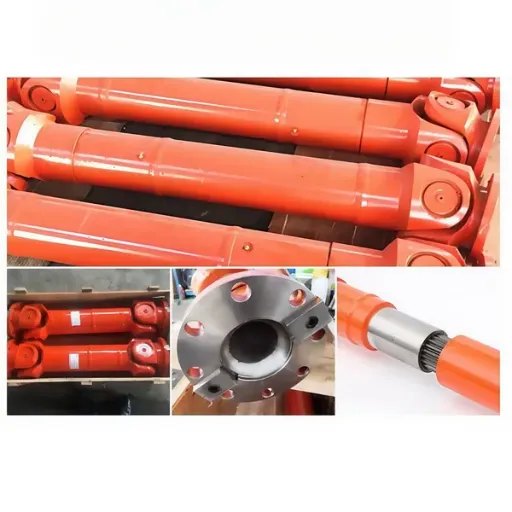
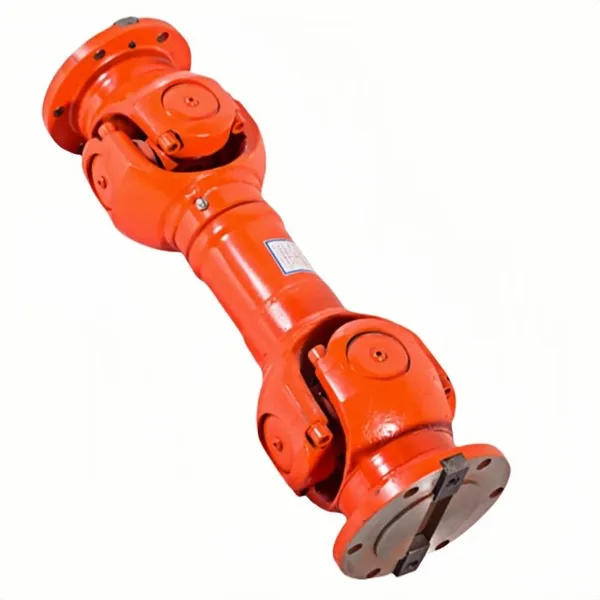
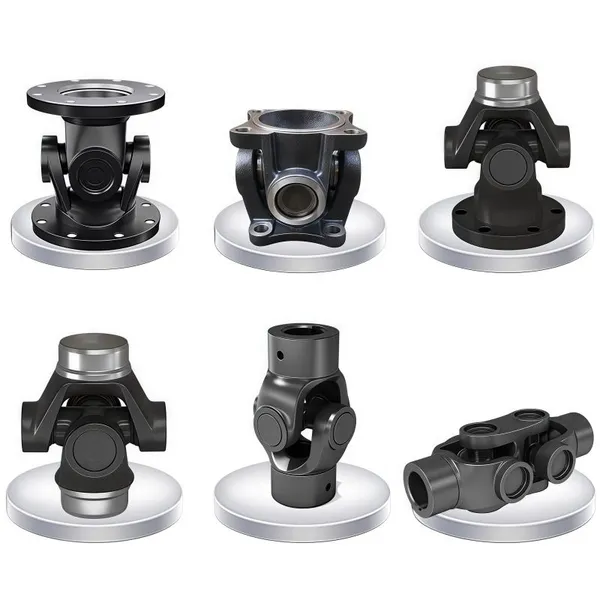
Cardan shafts, also called universal joint couplings or drive shafts, transmit torque across large angular misalignment. They're common in mobile equipment, long-distance shaft connections, and industrial drives where shafts aren't aligned.
A single universal joint creates speed fluctuation at high angles. Double cardan shafts reduce this effect. For industrial applications, dynamic balancing and proper lubrication are important.
Hebei Suju manufactures cardan shafts and universal joint couplings for mobile and industrial use. For more details, read our universal joint coupling guide.
Rigid Couplings
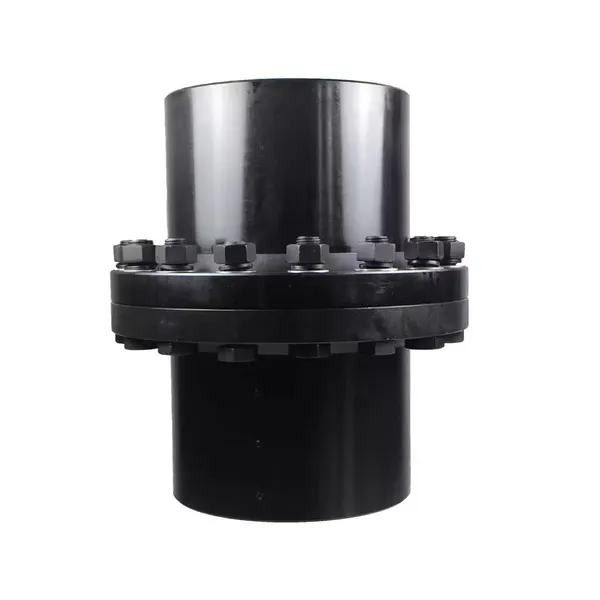
Rigid couplings connect two shafts with no allowance for misalignment. They're simple, compact, and low cost, but they require precise shaft alignment. Any misalignment creates high bearing load and stress.
Use rigid couplings only when shafts are truly aligned and no relative movement is expected. Examples include vertical pump drives and some precision machine tools.
Coupling Materials and Heat Treatment
The material of an industrial coupling affects its strength, wear resistance, and fatigue life. Gear coupling hubs and sleeves are typically made from alloy steel such as 42CrMo or equivalent. After machining, the teeth are induction hardened or carburized to achieve the required surface hardness. Flexible coupling elements use polyurethane, rubber, or other elastomers chosen for temperature and chemical resistance.
Heat treatment and material certificates are important for critical drives. A reliable supplier should document hardness values and provide material certificates on request. At Hebei Suju, our quality control process covers incoming material inspection, in-process checks, and final inspection before shipment.
Comparing Industrial Coupling Types
| Coupling Type | Torque Capacity | Misalignment Tolerance | Best Applications |
|---|---|---|---|
| Gear | Very high | Medium | Steel mills, mining, cement, cranes |
| Flexible/Jaw | Low to medium | Low to medium | Pumps, fans, compressors |
| Tyre | Medium | High | Crushers, conveyors, reciprocating machinery |
| Cardan Shaft | High | Very high (angular) | Mobile equipment, long drives |
| Rigid | High | None | Precision aligned shafts |
| Diaphragm | Medium to high | Low to medium | High-speed turbines, compressors |
This table is a starting point. For a deeper comparison, see our coupling selection guide.
How to Select an Industrial Coupling: Step by Step
Use this process the next time you need to know how to select an industrial coupling.
Collect application data. Record motor power, operating speed, shaft diameters, bore sizes, keyway dimensions, and expected misalignment. Include the duty cycle, number of starts per hour, and any reversing or braking loads.
Calculate torque. Determine nominal torque and multiply by a service factor based on application severity. Remember to consider both continuous and peak torque conditions.
Choose the coupling type. Match torque, speed, misalignment, and environmental needs to the right design. Compare gear, flexible, cardan, and rigid options against your priorities.
Check dimensions. Verify bore capacity, overall length, flange dimensions, and envelope limits. Confirm that the coupling fits the existing shaft spacing and maintenance access.
Specify options. Add balancing, seals, special materials, or coatings as needed. For high-speed drives, dynamic balancing is essential.
Confirm installation and maintenance. Make sure the coupling can be installed, inspected, and replaced without major downtime. Split hubs or spacer designs can reduce maintenance time.
Request a sample for custom parts. For new or critical designs, test a sample before volume production. This step verifies fit, finish, and performance under actual conditions.
Mini-Story: A project engineer named Priya was specifying a coupling for a new wastewater treatment pump. She collected motor data, measured shaft alignment during a site visit, and noted that the pump room had high humidity. Based on this, she selected a sealed flexible coupling with corrosion-resistant hardware. The pump has run for two years without coupling-related downtime.
Common Mistakes in Coupling Selection
Even experienced engineers make selection errors. Avoid these common mistakes:
Ignoring service factor: Using nominal torque only leads to under-sizing and premature fatigue.
Underestimating misalignment: Assuming perfect alignment causes edge loading and early wear.
Wrong coupling type: Choosing a rigid coupling where flexibility is needed, or vice versa.
Neglecting environment: Dust, moisture, heat, and chemicals can destroy an otherwise correct coupling.
Poor lubrication: Gear and universal joint couplings need the correct lubricant at the right interval.
Copying the old part without analysis: A failed coupling may have been incorrectly sized from the start.
If you are replacing a failed coupling, investigate the root cause before ordering. Misalignment, overload, contamination, and lubrication failure all require different solutions.
When to Choose a Custom Industrial Coupling
Catalog couplings fit many applications, but some situations require a custom design. Consider a custom industrial coupling when:
Shaft bores or keyways are non-standard.
The space between shafts requires a special spacer length.
Torque, speed, or misalignment exceeds standard catalog ranges.
The original manufacturer has discontinued the part.
The equipment was modified and the original coupling no longer fits.
The environment requires special materials, seals, or coatings.
At Hebei Suju, we specialize in drawing-based customization. Send us your drawing or worn sample, and our engineers will review manufacturability, recommend materials, and confirm torque and fit requirements. Learn more about our custom coupling manufacturing process.
Mini-Story: A steel plant in Southeast Asia needed to replace a legacy drum gear coupling. The original drawing was incomplete and the manufacturer no longer existed. The plant sent the worn sample to Hebei Suju. Our engineers reverse-engineered the dimensions, upgraded the material to handle higher shock loads, and delivered the custom coupling within the maintenance shutdown window. It has operated without failure for more than 18 months.
Frequently Asked Questions About Industrial Coupling Selection
What information do I need to select an industrial coupling?
You need motor power or torque, operating speed, shaft diameters and keyway sizes, expected misalignment, operating environment, and duty cycle. The more complete the data, the better the coupling selection.
How do I calculate coupling torque?
Calculate nominal torque from motor power and speed. Then multiply by a service factor based on application severity. The coupling rated torque should equal or exceed the adjusted torque value.
Can one coupling type handle all types of misalignment?
No. Different coupling types handle different combinations of angular, radial, and axial misalignment. Gear couplings handle moderate levels of all three. Flexible couplings handle small misalignment. Cardan shafts handle large angular misalignment. Rigid couplings handle none.
What is the best coupling for high-torque applications?
Gear couplings are usually the best choice for high-torque, heavy-duty applications such as steel mills, mining crushers, and cement kilns. For very high torque with some shock absorption, tyre couplings are also an option.
When should I use a flexible coupling instead of a gear coupling?
Use a flexible coupling when vibration damping, electrical isolation, or simple maintenance matters more than maximum torque capacity. Motor-pump sets, fans, and compressors often use flexible couplings.
Does coupling balancing matter?
Yes, especially at high speeds. An unbalanced coupling causes vibration, bearing load, and noise. For speeds above 3,000 RPM, specify dynamic balancing to the appropriate ISO grade. Large couplings for low-speed drives may not need balancing, but high-speed precision couplings almost always do.
How do I know if a standard coupling will work or if I need a custom design?
Start with a standard coupling if your torque, speed, misalignment, and dimensions fall within published catalog ranges. You'll need a custom coupling when bore sizes are non-standard, space is limited, or the application exceeds catalog ratings. A custom coupling is also the right choice when you're replacing a discontinued part.
Knowing how to select an industrial coupling protects your equipment, reduces downtime, and lowers total cost of ownership. The selection process comes down to five criteria: torque with service factor, operating speed, shaft misalignment, environment, and space constraints. Match these requirements to the right coupling type, and you'll avoid most premature failures.
Key takeaways:
Always size couplings using nominal torque multiplied by a service factor.
Measure or estimate angular, radial, and axial misalignment before selecting a coupling.
Choose gear couplings for high torque, flexible couplings for vibration damping, and cardan shafts for large angular misalignment.
Consider temperature, dust, moisture, and chemical exposure when specifying materials and seals.
For legacy or special applications, a custom coupling may be the most reliable solution.
At Hebei Suju, we help buyers and engineers select industrial couplings for machinery manufacturing, steel, mining, cement, chemical, and automation applications. Explore our industrial coupling range, or send us your drawing for a free engineering review.
Recently Posted
-
Jaw Coupling Spider Replacement: A Step-by-Step Maintenance Guide
July 28, 2026A maintenance technician at a packaging plant in Brazil noticed vibration on a motor-pump set during his morning rounds. The motor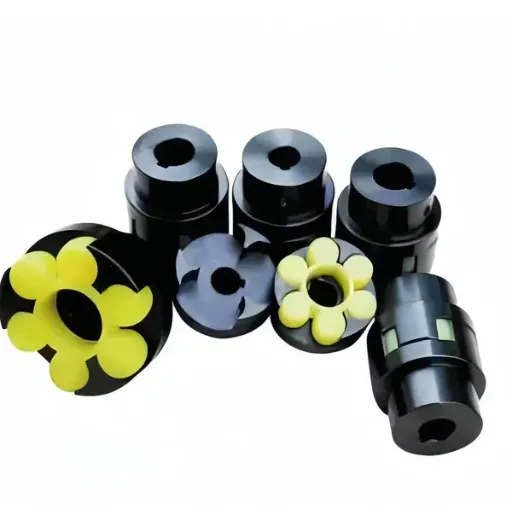 Read More
 -
Flexible Coupling for Motor Pump Sets: A Selection Guide
July 28, 2026A maintenance manager at a water treatment plant in Southeast Asia called us after replacing motor pump couplings three times in 1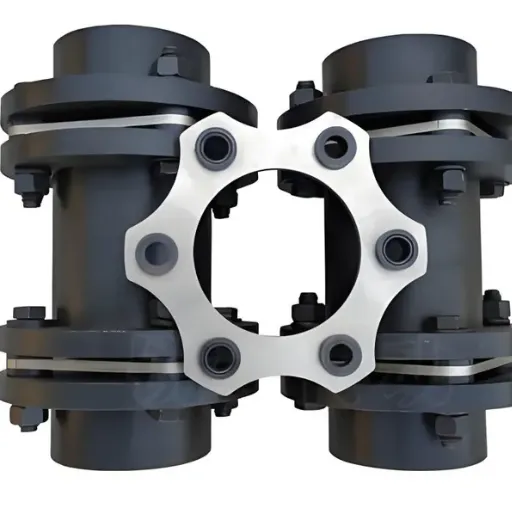 Read More
 -
Flexible Shaft Coupling: Selection Guide for Industrial Drives
July 28, 2026When two rotating shafts are connected directly, even a small amount of misalignment can generate vibration, bearing load, and pre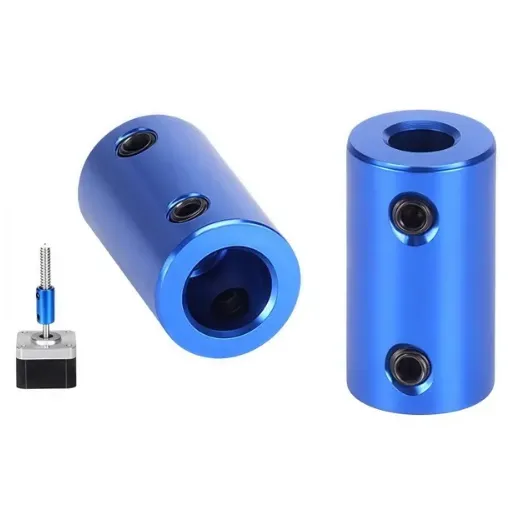 Read More
 -
Elastic Coupling: Vibration Control for Industrial Drives
July 28, 2026When a motor-pump set starts vibrating above acceptable limits, the first checks usually fall on bearing wear, impeller balance, o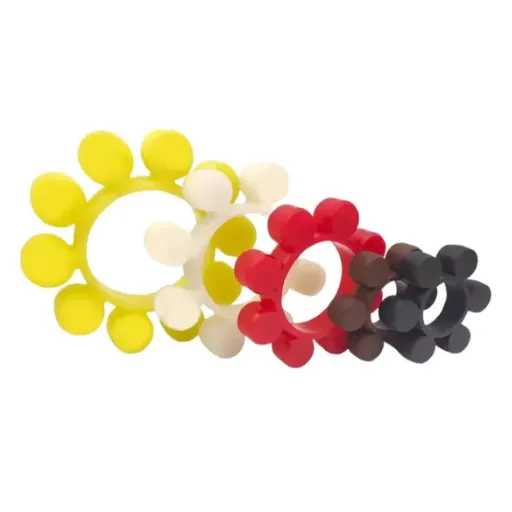 Read More

Contact Us

Recommended Products
-
 OEM Customizable Cardan Shaft Coupling Flexible Rigid Steel for Air Compressor Propeller Universal Construction Printing ShopsNegotiableMOQ: 2 Pieces
 -
Kc Coulpling Roller Chain Coupling Set With Chain and Sprocket for General MachineryNegotiableMOQ: 1 Piece
-
High Transmission Efficiency Drum Gear Coupling Easy Installation Gear Coupler For Heavy MachineryNegotiableMOQ: 10 Pieces
-
High-Torque Roller Chain Coupling Durable Steel Aluminium Construction Customizable Precision Engineering OEM Shaft CouplingsNegotiableMOQ: 2 Pieces
-
Customizable Rigid Iron Steel Aluminium Rubber Tyre Coupling OEM Support for Pumps Industrial Equipment Construction IndustriesNegotiableMOQ: 10 Pieces
-
Jsb Flexible Grid Coupling With Metallic Elastic Element Factory Direct Spider Snake Spring CouplingNegotiableMOQ: 10 Pieces
-
High Torque JQ/JQW Type Clamp Coupling for Motor & Gearbox 45 Steel Jacketed Iron Disc Structure Flexible Rigid OEM SupportedNegotiableMOQ: 2 Pieces
-
SWC Series Flange Universal Joint Coupling Hardened Cross Shaft Heavy Duty TransmissionNegotiableMOQ: 1 Piece
-
Heavy Duty Universal Coupling High Quality Universal Shaft for Machinery and EquipmentNegotiableMOQ: 1 Piece
-
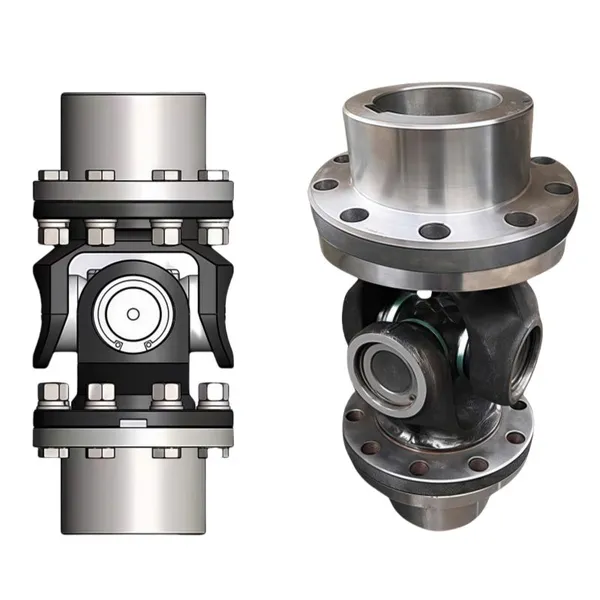
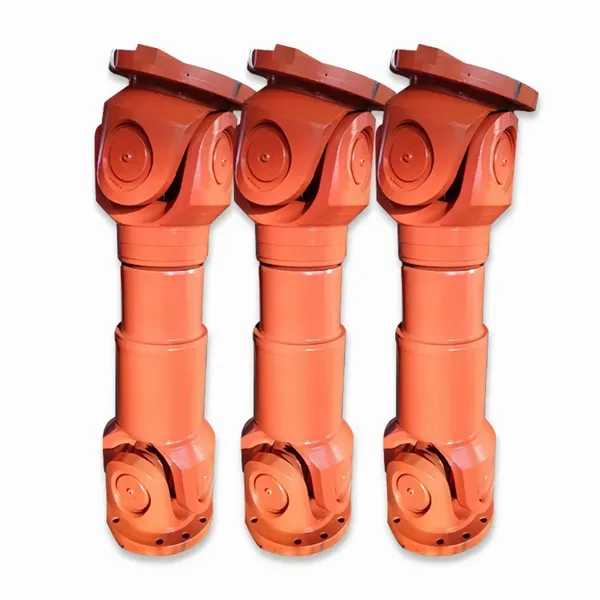
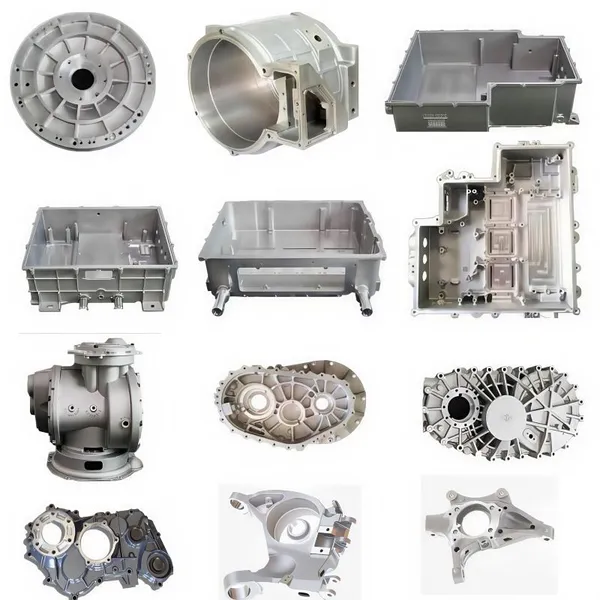
OEM Customized Precision Cast Iron Zinc Aluminum Die Castings New Hydraulic Parts Fittings 1 Year WarrantyNegotiableMOQ: 100 Pieces
-
Yl Series Rigid Flange Coupling Power Transmission PartsNegotiableMOQ: 2 Pieces
-
Flange Coupling for Water Pump and Compressor Applications With Rubber Gasket SealNegotiableMOQ: 2 Pieces
-
Heavy-Duty Telescopic Welding Cardan Shaft for Universal UseNegotiableMOQ: 1 Piece
-
Flexible Universal Shaft Flange Coupling for Marine and Industrial Drive SystemsNegotiableMOQ: 10 Pieces
-
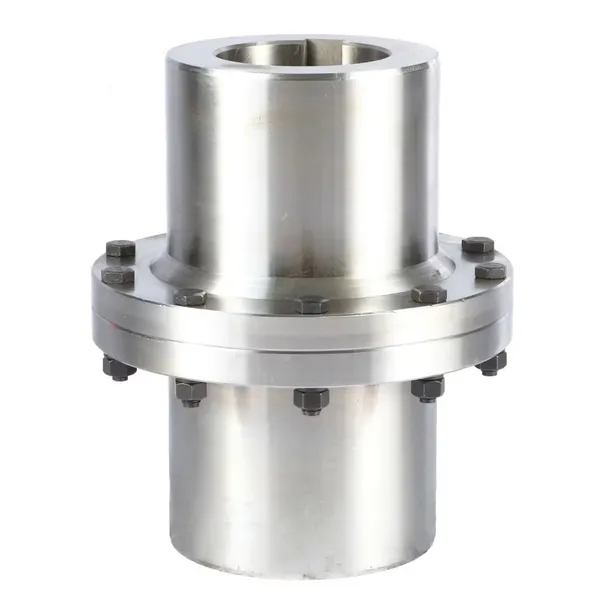
Durable Expansion Sleeve, Locking Assembly & Taper Lock Bushing for Robotic Arm JointsNegotiableMOQ: 1 Piece
-
High Quality Yl Type Rigid Flange Coupling Mechanical Transmission CouplingNegotiableMOQ: 2 Pieces
-
Stainless Steel Flexible Universal Joint Coupling for Motor Flange Gear Pump and Spline ShaftNegotiableMOQ: 1 Piece
-
Compact Drum Gear Coupling for Heavy Industrial Transmission High Torque CapacityNegotiableMOQ: 10 Pieces
-
TL Series Elastic Pin Coupling Easy Replace Rubber Bush Coupling With Shaft Misalignment CompensationNegotiableMOQ: 10 Pieces
-
Professional Manufacture SWC-Wf Cardan Shaft Universal Joint CouplingNegotiableMOQ: 1 Piece